
The modern academic landscape is shifting rapidly, moving away from simple rote memorization toward a more holistic integration of theory and practice. For undergraduate students, this transition represents a significant challenge. You are no longer just asked to understand a concept; you are expected to apply it in complex, real-world scenarios. Whether it is a philosophical argument or a mathematical proof, the logic behind the theory serves as the blueprint for every successful practical application. Mastering this synergy is the secret to not just passing your classes, but truly excelling in your chosen field.
The pressure to perform across diverse subjects can be overwhelming, especially when every professor expects a masterpiece. Many students find that managing a full course load requires more than just hard work—it requires a strategic approach to time management. Utilizing high-quality resources, such as the expert assignment help canada from Myassignmenthelp, allows individuals to maintain their academic momentum while ensuring that every submission meets rigorous institutional standards. By delegating some of the heavier writing burdens, you can free up the mental energy needed to focus on the core logic of your primary major.
Understanding the Blueprint: Why Theory Matters
Theoretical logic is the “why” behind the “how.” It provides the framework that prevents us from making avoidable mistakes. When you study the foundations of a subject, you are essentially learning the rules of the game. Without this understanding, practical tasks become a series of guesses rather than a calculated execution. Logic allows you to predict outcomes, troubleshoot errors, and innovate within your discipline.
For many, the jump from reading a textbook to completing a project feels like a chasm. This is because theory is often abstract, while practice is messy and unpredictable. However, the logic you learn in your early years of study is designed to be the bridge across that chasm. It gives you the vocabulary and the mental models necessary to navigate complex problems that don’t have a simple answer in the back of a book.
The Challenge of Modern Technical Work
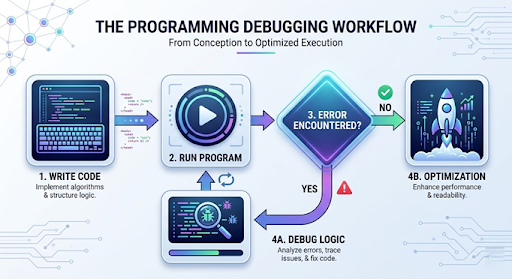
In today’s curriculum, technical assignments are becoming more demanding. It is no longer enough to just “know” the material; you have to demonstrate it through functional outputs. This is particularly true in STEM fields where the margin for error is razor-thin. A single misplaced variable or a flawed logical premise can cause an entire project to fail. This high-stakes environment is why many students prioritize finding reliable programming assignment help through Myassignmenthelp during their most intensive semesters. Having a technical guide helps in deconstructing complex logic into manageable steps, ensuring that the final code is not only functional but also optimized for performance.
Comparative Framework: Theory vs. Practice
| Feature | Theoretical Logic | Practical Application |
| Focus | Principles and Concepts | Execution and Results |
| Goal | Understanding the “Why” | Achieving the “How” |
| Output | Research, Essays, Proofs | Code, Designs, Prototypes |
| Risk | Conceptual Misunderstanding | Functional Failure |
| Growth | Cognitive Development | Skill Acquisition |
Strategies for Bridging the Gap
To truly succeed, you must stop viewing your lectures and your labs as separate entities. Here are several ways to integrate them:
- Reverse Engineering: When you finish a practical task, look back at the theory. Does the result align with what the logic predicted? If not, where did the deviation occur?
- Visual Mapping: Create flowcharts that connect a theoretical principle to a practical step. Seeing the connection visually can help solidify the logic in your mind.
- Active Testing: Don’t just follow a tutorial. Change one variable and see what happens. This “what if” approach is the essence of logical exploration.
Building Authoritative Content
When you write an essay or a report, you are essentially building a case. Your arguments need to be supported by data, and your logic needs to be airtight. This is what search engines and professors alike refer to as authority. By citing credible sources and showing a clear progression of thought, you demonstrate that you haven’t just memorized facts, but have internalized the underlying principles of the subject matter.
The global student community faces similar hurdles regardless of their specific field. Whether you are studying in a massive lecture hall or a small seminar, the need for clarity remains the same. High readability is key. If a peer from a different department can’t understand your basic logic, your explanation probably needs more work. Simplifying complex ideas without losing their essence is the hallmark of a true expert.
Overcoming Technical Roadblocks
Technical hurdles are a natural part of the learning process. They are not signs of failure, but rather opportunities for growth. When you hit a wall, it usually means your current logical model is missing a piece of information. Seeking help isn’t about finding a shortcut; it’s about gaining a new perspective that allows you to move forward. The goal is to reach a point where you can troubleshoot your own work with confidence.
In the long run, the students who excel are those who remain curious. They don’t just ask “What do I need to do to get an A?” but rather “How does this concept apply to the next project?” This mindset shifts the focus from grades to mastery. When you master the logic, the grades tend to follow naturally as a byproduct of your expertise.
Conclusion: The Path Forward
Integrating theoretical logic with practical technical assignments is a lifelong skill. As you move into your professional career, the problems you face will only become more complex. By developing a strong foundation now and learning how to use available resources effectively, you set yourself up for long-term success. Remember that every assignment is a building block in your intellectual foundation. Treat the theory with respect, and the practice with persistence.
Frequently Asked Questions (FAQ)
1. Why is it hard to apply theory to practical tasks?
Ans: Theory is often idealized and removes the “noise” of the real world. Practice involves constraints like time, resources, and unexpected variables that aren’t always covered in a basic lecture.
2. How can I improve my logical thinking skills?
Ans: Engagement is key. Practice puzzles, engage in debates, and always ask “why” something works the way it does. Breaking large problems into smaller, logical parts makes them much easier to solve.
3. Is it okay to use external academic support?
Ans: Yes. Using support services is a common way for students to manage high-stress periods and learn from expert examples. It helps in understanding the standards required for high-level academic work.
4. How do I know if my assignment is “spammy” or low quality?
Ans: Quality content is defined by depth and clarity. If your work relies on repetitive phrases or lacks specific examples and cited data, it may be perceived as low quality. Always aim for “E-E-A-T”—Expertise, Experience, Authoritativeness, and Trustworthiness.
5. What is the best way to prepare for technical exams?
Ans: Combine active recall of theoretical concepts with timed practical drills. The more you practice the application, the more the underlying logic becomes second nature.
About The Author
I am a dedicated academic consultant and content strategist with over eight years of experience in the higher education sector. My passion lies in helping students navigate the often-daunting bridge between complex theoretical concepts and high-level practical execution.